


When it comes to renewable infrastructure, scale is paramount: outside Europe, there are numerous massive solar parks boasting staggering generation capacities. Here, we take a look at the world’s five largest photovoltaic installations–awe-inspiring projects that are as impressive as they are powerful.
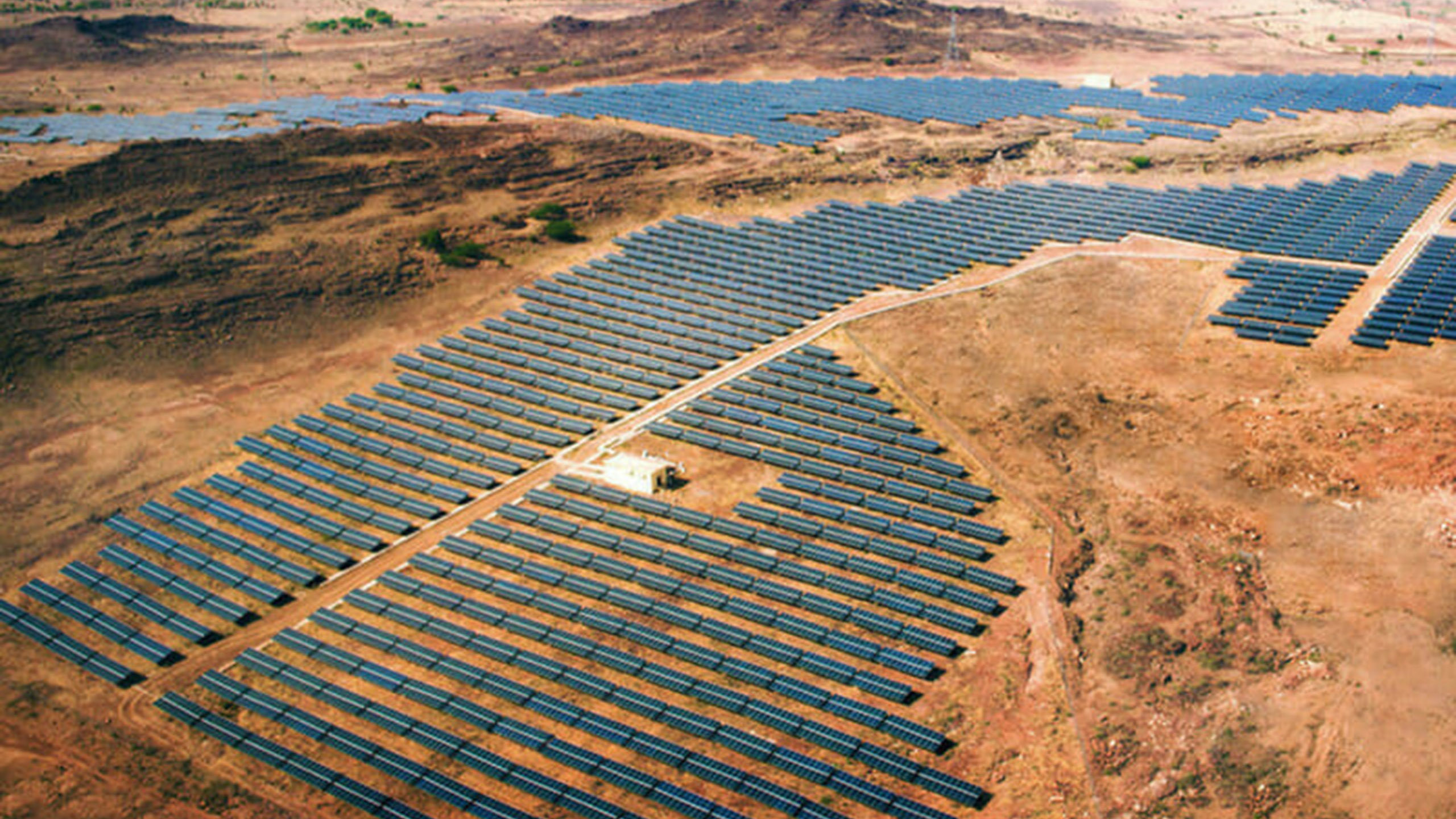
With up to 2.2 gigawatts of installed capacity per site, solar parks could already play a major role in meeting the world’s future energy needs. At present, however, the largest solar parks are found mainly in Asia. Europe, specifically, must accelerate its expansion efforts, because large-scale expansion of photovoltaics (PV) is essential if climate targets are to be met – and time is running short.
The sheer magnitude of these installations is evident in the following global ranking:
-
5. Mohammed bin Rashid Al Maktoum Solar Park
Location: United Arab Emirates
Installed capacity: 1,630 MW
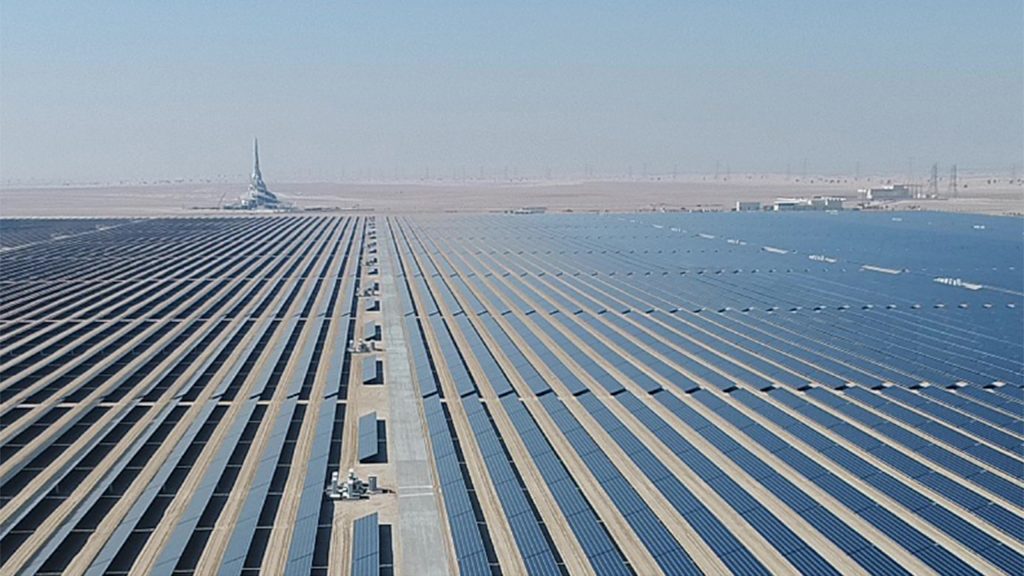 Mohammed bin Rashid Al Maktoum Solar Park, Dubai
Covering an area of 76 square kilometers, this photovoltaic plant in Saih Al-Daha, around 50 kilometers south of Dubai, has a capacity of 1.63 gigawatts (GW). The project is set to be expanded to 5 GW by 2030. The solar park powers approximately 270,000 households and offsets a total of 1.4 million metric tons of CO2.
Developed and managed by the Dubai Electricity & Water Authority, the solar park is one of Dubai’s flagship initiatives under the Dubai Clean Energy Strategy 2050, which aims to derive 75 percent of the city’s power from clean energy sources by 2050.
-
4. Benban Solar Park
Location: Egypt
Installed capacity: 1,650 MW
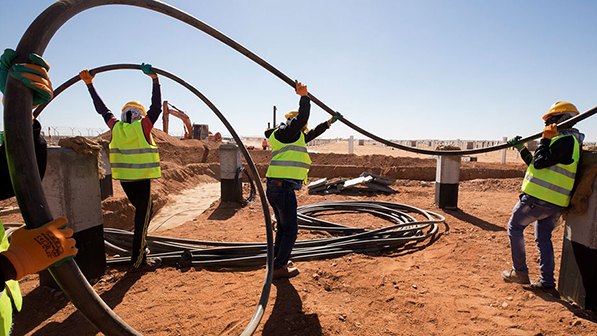 Construction of Benban Solar Park, Aswan
Located in Benban in the Aswan Governorate, this solar park is not only the largest in Egypt, but also in all of Africa. Equipped with 41 solar power plants, the complex has a total solar generation capacity of 1.65 GW. The project is overseen by Egypt’s state-run New and Renewable Energy Authority (NREA) and aligns with the government’s Sustainable Energy Strategy 2035.
The 37-square-kilometer facility in the country’s Western Desert was connected to Egypt’s power grid in 2019 and currently supplies electricity to more than 420,000 households.
-
3. Pavagada Solar Park
Location: India
Installed capacity: 2,050 MW
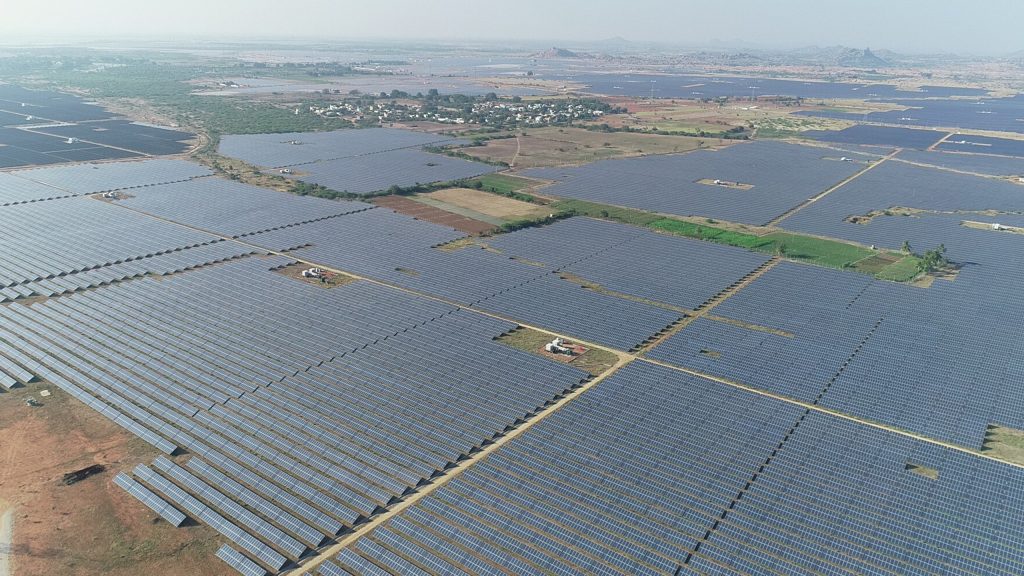 Pavagada Solar Park, Karnataka
Pavagada Solar Park is located in the Pavagada taluk of the Tumkur district within Karnataka, southern India. The 2.05 GW installation covers almost 53 square kilometers and was built by the Karnataka Solar Power Development Corporation (KSPDCL). The project required an investment of 2 billion US dollars and entered operation in December 2019.
Since then, Karnataka has become the Indian state with the highest share of solar energy, which accounts for around 22 percent of the state’s total power capacity.
-
2. Golmud Solar Park
Location: China
Installed capacity: 2,200 MW
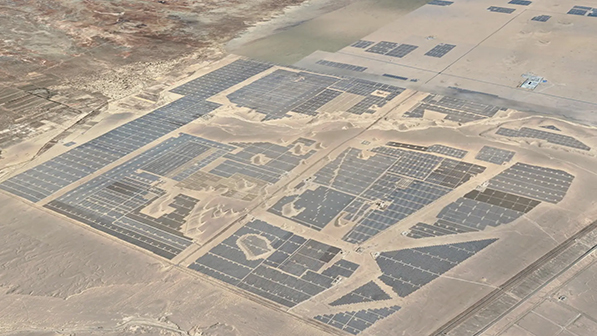 Golmud Solar Park, Qinghai
This facility, with an installed solar capacity of 2.2 GW, is also known as the Huanghe Hydropower Hainan Solar Park. It is located in Golmud, in Qinghai Province, and was built by Huanghe Hydropower Development, a state-owned power generation company, at a cost of around 2.3 billion US dollars. Situated on the southern edge of the Gobi Desert, it is the largest solar park in China and includes energy storage capacity of 202.8 megawatts.
Developed in five phases, the project went into operation in 2020.
-
1. Bhadla Solar Park
Location: India
Installed capacity: 2,245 MW
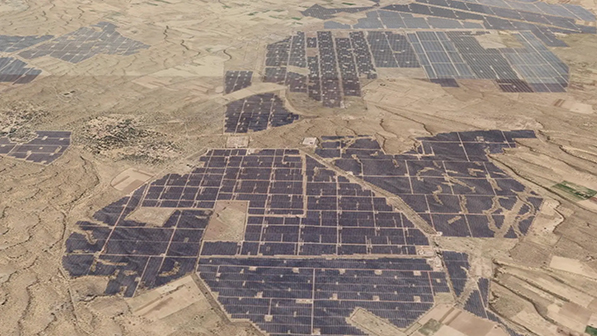 Bhadla Solar Park, Rajasthan
Bhadla Solar Park is the largest solar park in the world. The facility stretches across 57 square kilometers and is located in Jodhpur district in Rajasthan. With a capacity of almost 2.25 GW, the solar park required an estimated investment of more than 1.3 billion US dollars. Commissioned in 2017, the project includes more than 10 million solar modules.
It was developed in four phases by India’s Ministry of New and Renewable Energy (MNRE) in line with the Rajasthan Solar Energy Policy of 2011. The site optimally leverages the arid conditions of the Thar Desert to generate clean, renewable energy.