


Enery Hike at European Forum Alpbach 2026: Enery brought together leading experts who defined milestones for Europe’s renewable energy future.
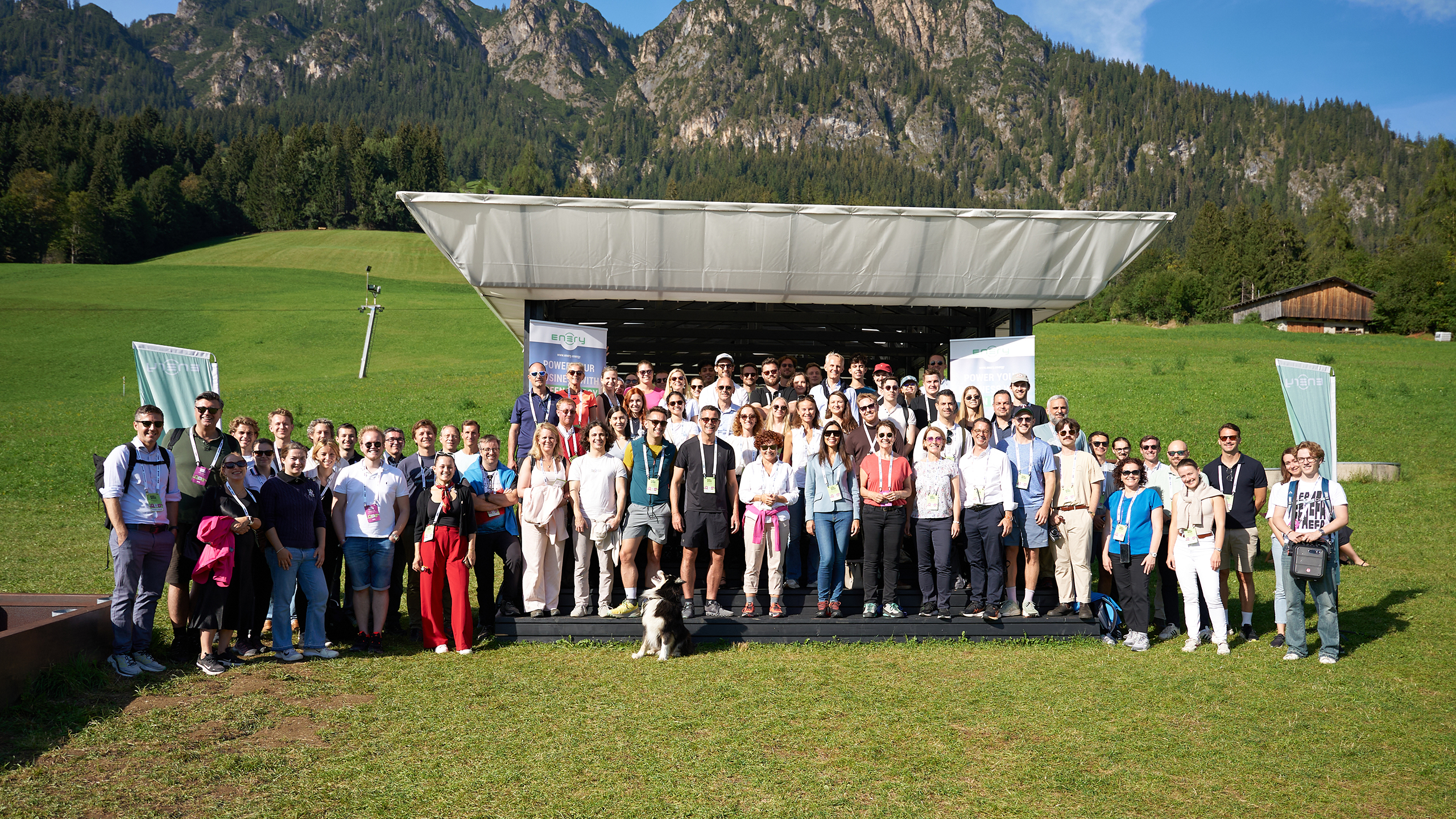
What will it take for Europe to win – and what does “winning” actually mean? Those questions took centre stage at the European Forum Alpbach (EFA) 2026, where more than 4,000 participants from around the world once again turned the Tyrolean mountain village into a think tank for Europe. Discussions focused on the continent’s capacity to act, compete and safeguard its sovereignty. Enery, meanwhile, took the debate to a place where new perspectives quite literally emerge: up the mountain.
The Austrian green power provider hosted the Enery Hike, a trek that—under the motto “Europe’s Race for Energy Competitiveness and Resilience”—became a high-caliber discussion forum. Joining Enery Co-Founder and CEO Richard König on the trail were State Secretary Elisabeth Zehetner, Sabine Herlitschka (CEO Infineon Austria), Gudrun Senk (CTO Wiener Linien), Marina Kobakova (Country Manager ING Bulgaria and Austria) and neoom-Gründer Walter Kreisel. among others. The exchange was moderated by Lukas Stühlinger,, Managing Partner at FINGREEN.
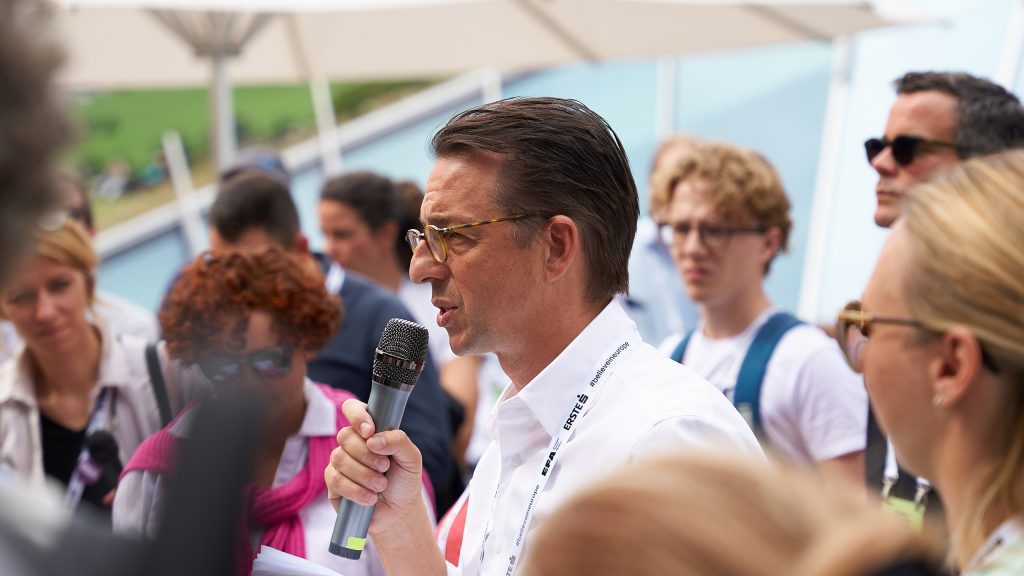 Lukas Stühlinger (FINGREEN)
Leveraging Europe’s Strengths
There was a consensus that speed requires scale; Europe must focus on large-scale renewable projects, rapid grid expansion with stronger European integration, and significantly faster permitting processes. Greater regulatory harmonization could serve as a pivotal lever.
“Europe needs 100% renewable baseload power at competitive prices, with more value created in Europe,” Richard König asserted with conviction. According to the Enery CEO, key milestones for realizing this vision would include a single price zone, the accelerated expansion of interconnectors and national grids, nearshoring, AI-automated component factories, and smart public procurement practices.
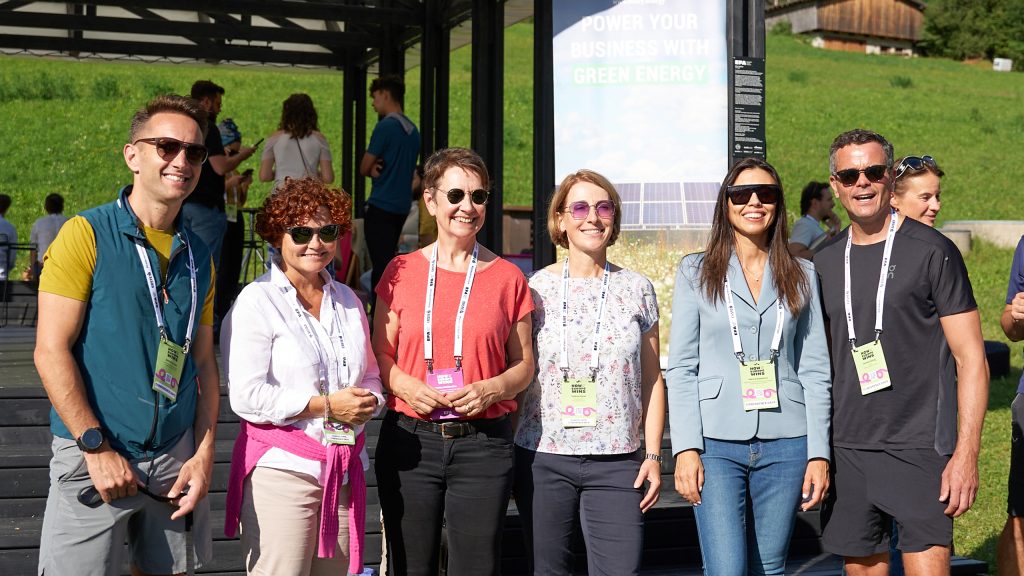 The speakers (f.l.): Walter Kreisel, Elisabeth Zehetner, Sabine Herlitschka, Gudrun Sengl, Marina Kobakova and Richard König.
“For Europe to win, we need to turn ambition into execution,” said Marina Kobakova. While there is capital available, she noted that the he challenge is having enough mature, bankable projects ready to absorb it at scale. “Faster permitting, a stronger and more harmoniZed regulatory framework, ans greater investment in grid infrastructure are essential to accelerating electrification, strengthening energy security and enhancing Europe’s competitiveness.” As one of Europe’s leading financial institutions, ING is committed to financing the energy transition and renewable energy, while mobilising the capital needed to support the transition, Kobakova stated.
“Technology is a key driver of geopolitical competition—both in the transformation of the energy system and in fields such as artificial intelligence, quantum computing and robotics,” explained Sabine Herlitschka. Europe has proven technological strengths and global market leaders, and it needs to make full use of both. “When you are competitive yourself, you operate from a position of strength.”
“For a European tech company, securing that first reference project is more valuable than any subsidy,” added Gudrun Senk. “Public entities can award these—and in doing so, build European Champions—if innovation carries as much weight as price in the public procurement process.”
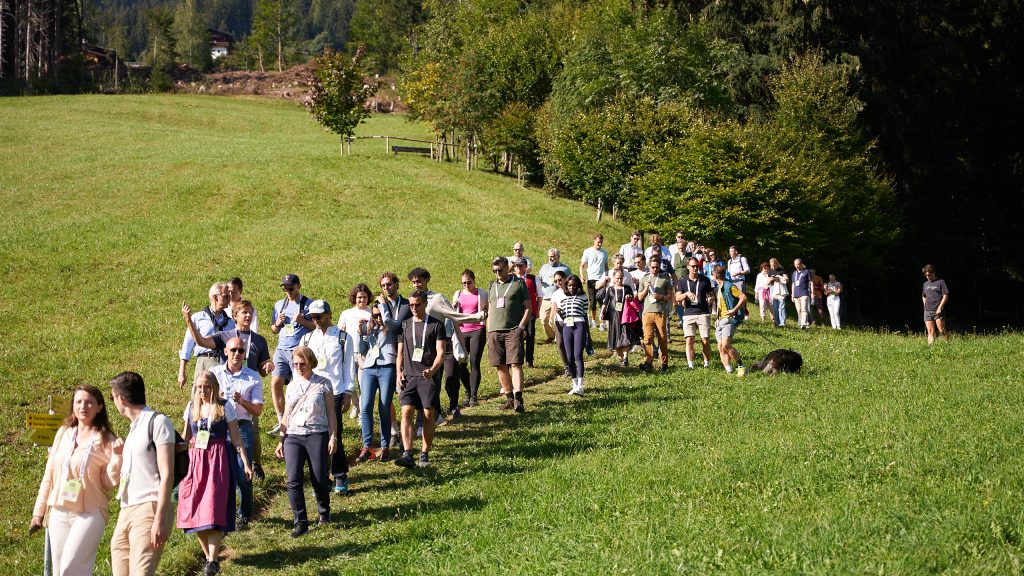 Richard König: “We have covered 50% of the hike’s distance. But 80% of the elevation gain still lies ahead of us.”
The Climb Is Worth It
Richard König’s conclusion: “The key will be playing to our own strengths more consistently. Europe has the capability to generate competitive electricity, whether through hydro and wind power in Scandinavia, solar in Spain, hybrid power plants in Estonia or Romania, or pumped storage facilities in Austria.” Resources and economies of scale must be utilized smartly, interconnectors expanded, and the build-out of storage facilities advanced rapidly and without bureaucracy, thereby creating a truly competitive European electricity market. “Low energy costs allow tech companies to manufacture within Europe as well. Europe is also becoming a more attractive location for hyperscaler data centers,” the Enery CEO noted. “We now have over 50% renewable electricity in Europe—meaning we have covered 50% of the hike’s distance. But 80% of the elevation gain still lies ahead of us on the path toward 100% renewable baseload power in a European electricity system.”