


Europe’s electricity markets remain volatile, making it extremely difficult for industrial players especially in the CEE region to plan their costs – by cushioning the impact of price fluctuations and helping fulfil ESG goals, PPAs transform market risks and achieve greater certainty for long-term planning.
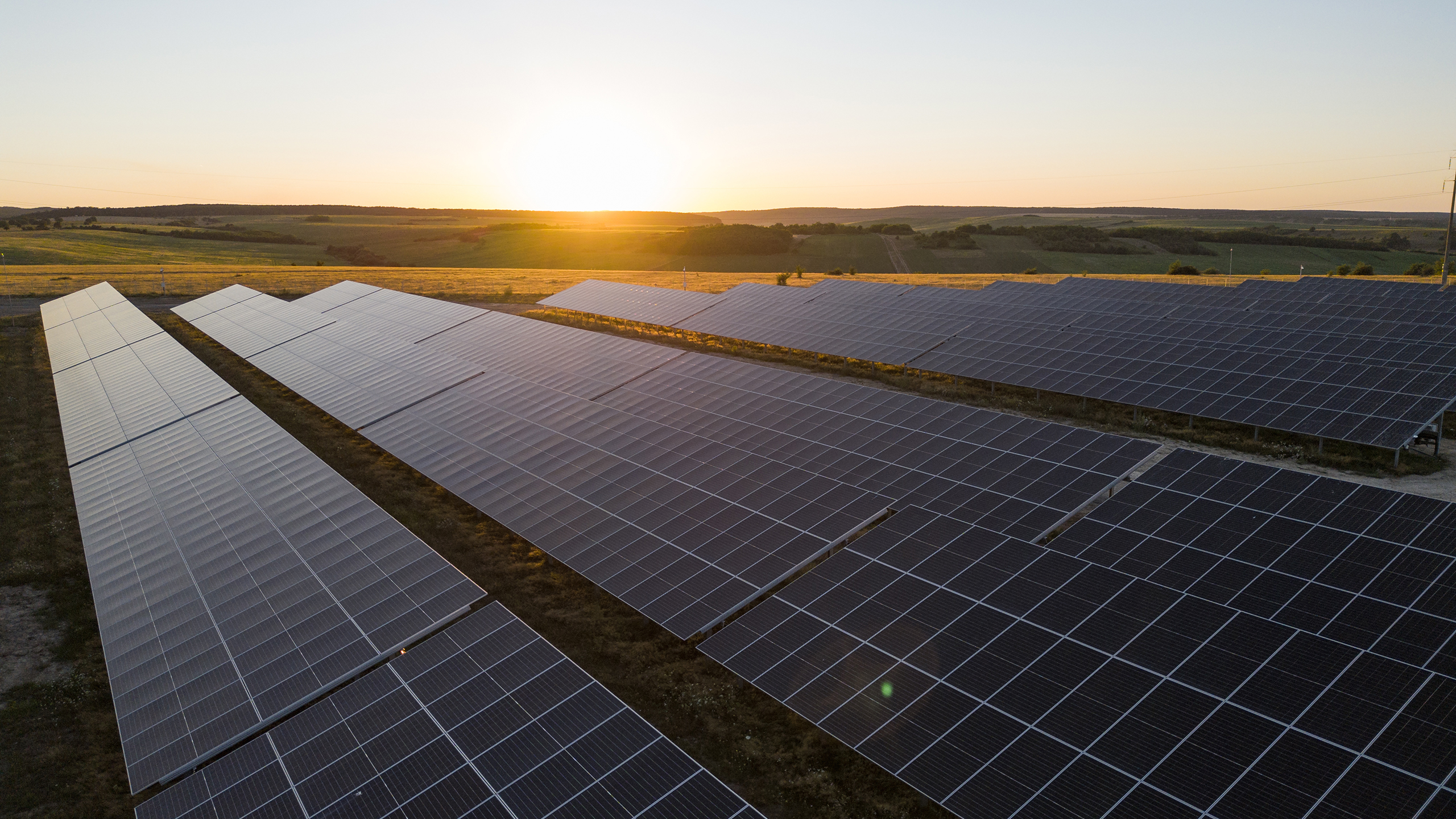
Europe’s power markets are navigating turbulent waters. For instance, the European Union Agency for the Cooperation of Energy Regulators (ACER) has noted that daily wholesale price fluctuations in 2025 were roughly five times higher than in 2020.
Even falling average prices do little to resolve this underlying issue. According to Eurostat, non-household consumers in the EU with an annual consumption of between 500 and 2,000 MWh paid an average of 18.37 cents per kilowatt-hour in the second half of 2025 – down 3.5 percent from the first half of the year. However, over the same period, actual prices rose year-on-year by 15.4 percent in Romania, 6.8 percent in Bulgaria and 1.4 percent in Slovakia.
It is precisely these disparities that are critical for businesses: it is not just the absolute level of electricity costs that impacts their competitiveness, but also how reliably these costs can be projected over several years.
Planning is essential
For energy-intensive companies, predictability can have an impact far beyond the procurement department. Knowing a significant portion of your electricity costs for the coming years means you can set more robust budgets, calculate margins more accurately and evaluate investments with less uncertainty. Price quotes for customers, location decisions and electrification of processes previously reliant on fossil fuels can all be made on a more stable cost basis.
This is where Power Purchase Agreements (PPAs) come in: long-term electricity supply contracts between a generator and an offtaker, where delivery can be physical or arranged via a virtual or financial agreement, depending on the structure. But the bottom line for all of them is the same: the core economic benefit lies in long-term price hedging.
“Our observation is that corporate demand remains the primary driver behind long-term offtake agreements,” confirms Todor Marinov, Deputy Chief Commercial Officer (CCO) at Enery, and he adds that companies across different sectors seek to secure renewable electricity while managing costs and decarbonization targets.
Cross-border structures are becoming more common, Marinov notes. Enery’s track record already includes cross-border deals between Bulgaria, Slovakia, Romania and Hungary involving telecommunications and heavy industry clients.
One of the most notable developments is the growing preference for virtual PPAs, the Deputy CCO continues, with corporates increasingly opting for financial contracts over physical delivery arrangements. These structures allow companies to hedge electricity prices without engaging directly in supply or grid operations, reducing operational complexity while providing price certainty. At the same time, they offer greater flexibility in how electricity is sourced.
Hedging against volatility
Many markets in the CEE region are undergoing a profound transformation: coal and other fossil fuels are losing relevance over the long term, solar and wind power are growing rapidly, grids are being expanded and storage is gaining importance. This opens up opportunities but also creates new price dynamics during the transition phase.
Bulgaria is a prime example of this. According to the European Commission, the average wholesale price there in 2025 was €107 per MWh, placing it among the top five in the EU. At the same time, average daily price spreads reached €157 per MWh. The Commission cites the system’s current lack of flexibility as a major cause: high solar production pushes prices down during the day, while flexible capacity is lacking in the evening, forcing more expensive generation to step in.
From an industrial perspective, this creates two simultaneous tasks: companies must hedge against volatility – and increasingly structure their energy procurement to fit a power system where the proportion of intermittent generation is growing. This is exactly why the European Commission also considers PPAs to be a building block for lower and more stable energy costs. The annual volume of electricity contracted via new corporate PPAs in the EU surged from 7.4 TWh in 2020 to 31.4 TWh in 2024; the number of contracts increased from 60 to 276 over the same period.
Hybrid models and storage
As solar and wind energy expand, PPAs themselves are also evolving. Traditional contracts linked to a single generation technology are increasingly being supplemented by portfolio and hybrid models. Solar and wind can partially complement each other across different times of the day and seasons of the year.
Hybrid PPAs, which combine generation with storage, are also gaining significance. Battery storage enhances reliability by compensating for fluctuations in generation and allowing energy to be dispatched during periods of lower output. Hybrid structures also allow supply profiles to better match consumption patterns, which is particularly relevant for industrial consumers with stable demand. By enabling energy shifting, these agreements can mitigate exposure to volatile spot markets.
From a financing perspective, projects that combine multiple technologies benefit from more diversified revenue streams, improving their financial feasibility compared with those that use just one kind of technology. At the same time, declining battery costs are supporting the economic case for hybridization, allowing greater flexibility in capital allocation across technologies.
Strategic partners
As electricity markets become more complex, PPAs need to be treated to a lesser degree as an off-the-shelf procurement product. The decisive factors are the load profile, location, risk appetite, contract duration, desired level of hedging, and what part of the energy needs should be procured over the long term versus flexibly.
“Our goal is to tailor PPAs specifically to our partners’ needs,” says Enery CCO Severin Vartigov. In practice, this means that a robust PPA does not start with a standard contract, but with an in-depth analysis of the actual consumption profile. Only then can a decision be made as to whether the most economically viable solution is a physical or virtual model, a single solar park, a technology portfolio or a combination with storage and market optimization.
Find all the details here: https://enery.energy/en/ppa/