


As Managing Director Austria at Enery, Johannes Trauttmansdorff-Weinsberg is playing a key role in the company’s success in one of the country’s most dynamic—yet challenging—industries. We sat down with him to discuss the state of Austria’s renewable energy market.
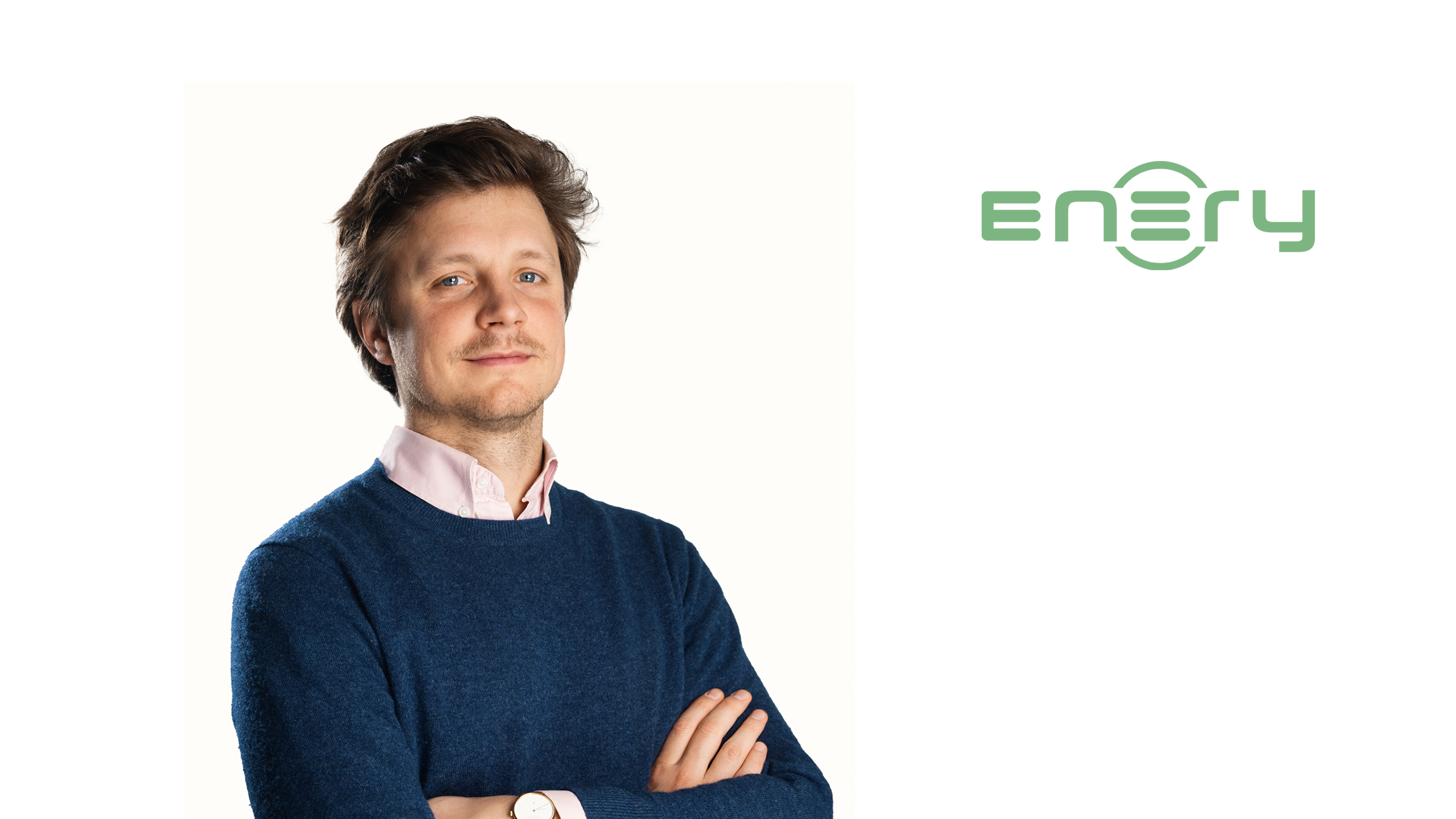
In his role as Managing Director Austria at Enery, Johannes Trauttmansdorff-Weinsberg oversees the company’s Austrian operations, spanning photovoltaic (PV) generation and project development, battery energy storage, wind power and M&A. At a time of profound market change—and in a country with Austria’s regulatory complexity—the role presents no shortage of opportunities and challenges.
To begin with, could you give us a brief update on the Austrian renewable energy market?
From a regulatory perspective, the new Electricity Industry Act in Austria has built a new foundation to drive key regulatory changes within the Austrian renewable energy market, however, momentum on required directives for decisive implementation has slowed somewhat in recent months. In general, it is becoming increasingly evident that grid expansion is not keeping pace with generation and that the most polarised question of who should bear the associated costs remains unresolved.
Doesn’t the new Electricity Industry Act (Elektrizitätswirtschaftsgesetz, ElWG) provide more clarity?
Not entirely. Quite a few issues remain unresolved. Regulatory framework conditions for zoning, permitting and grid infrastructure are still highly fragmented. Flat-rate grid connection charges have increased nationwide, while network usage charges continue to vary by each federal state and voltage level. Austria has 114 distribution system operators (DSOs), each holding state-specific grid concessions. Consequently, concession areas mirror the nine federal states, even if an actual grid footprint is much smaller or spans across multiple state lines. For a country of Austria’s size, that is frankly absurd. In my view, this fragmentation across various levels connected to infrastructure development is the single greatest obstacle to executing the energy transition as planned.
What is the situation for battery energy storage systems (BESS)?
There has been more movement on that front. The draft ordinance governing the principles for electricity system charges (Systemnutzungsentgelte-Grundsatzverordnung, SNE-G-V) sets out a new set of criteria for battery storage to qualify as “system-supportive”. At the same time, the market has been flooded with new development projecs and pipelines. That is triggering a market shake-out alongside widespread investment uncertainty—both of which are slowing down the rollout of battery storage.
What are the key sticking points?
It all comes down to grid usage fees, which are not only too high but—if a system is classified as “non-system-supportive”—are levied on all electricity drawn from the grid, even though it is fed back in later. As it currently stands, to achieve a supportive classification, several cumulative conditions must be met. One critical flaw, especially given our highly fragmented distribution grid, is that a battery storage system is not deemed system-supportive unless its location meets rigid criteria, such as high solar or wind penetration and frequent backfeed at the substation.
Markets elsewhere in Central and Eastern Europe appear to be further ahead …
Yes. The stand-alone battery storage market is advancing rapidly, particularly in Bulgaria. Poland, Bulgaria and Romania currently offer more favourable conditions than Austria, and their grid usage costs are significantly lower by comparison.
Where does Austria currently stand in the BESS market?
As I mentioned, the market was flooded with a large number of greenfield projects in 2025 and throughout H1 2026, including proposals from international investors. Numerous development platforms—from real-estate groups to national utilities—entered the market. Yet, comparatively few of the projects actually connected to the grid so far, because, frankly speaking, much of the activity was little more than hot air. That is now changing, and the first large utility-scale battery storage systems are coming online.
Aside from storage, where does Austria stand on renewable energy?
By international standards, Austria’s permitting procedures remain exceptionally complex and are split across multiple parallel processes at both provincial and municipal levels. The Renewable Energy Expansion Act (Erneuerbaren-Ausbau-Gesetz, EAG) has simplified some aspects of permitting, while the ElWG provides a baseline for the implementing ordinances needed to enable practical execution. Nevertheless, Austria’s underlying problems remain unresolved: reining in federalism and genuinely streamlining permitting processes. In the near-term, the ongoing uncertainty is slowing the deployment of battery storage, as investor confidence continues to be undermined.
What are the other challenges in Austria?
The most pressing challenges are grid capacity and grid costs—particularly network usage charges and grid connection costs, neither of which has been standardised sufficiently. We have numerous network operators, and even they lack clarity about who will ultimately pay the bill: grid operators, taxpayers, or private developers and asset owners?
If you had the power to remove one regulatory obstacle, which would it be?
Considering what I have raised before as one of the core issues in AT – grid development – I would frame it rather as a structural obstacIe that needs to be tackled to successfully deploy “yet-to-be implemented” regulations: I would abolish the current structure of 114 distribution system operators and consolidate their responsibilities within the seven largest operators, which already manage around 90 per cent of Austria’s distribution infrastructure anyway. The current set-up not only slows grid expansion but also delays the implementation of follow-up ordinances under the new ElWG. At the same time, it intensifies an already polarised political debate at provincial level over how infrastructure expansion should be funded in a highly federalised country.
How is Enery performing amid all these challenges?
In Austria, Enery has a robust pipeline of mid-to-late-stage development projects moving steadily into the execution phase. At the same time, we are well positioned to acquire ready-to-build projects and take them through construction into operation. This combination of M&A and in-house development is putting us on course to become a leading player in Austria, where the market is increasingly becoming a buyer’s market. The Dobl-Zwaring solar park is one example of what we can deliver. Four further solar parks are due to break ground this year alone. We now plan and permit every PV project with battery storage included, incorporating it both into our grid-connection applications and into the plant design itself. That applies to every single project. At the same time, we have built a substantial pipeline of stand-alone battery storage projects with an already substantial volume of secured grid capacity and continue to be highly active in several federal states. Project sites range from approximately 500 square metres to two hectares and are generally industrial plots located directly at, or close to, substations.
Enery also works closely with industry to advance the energy transition. How is that market developing?
Industrial companies have a strong interest in stable electricity prices and, of course, in renewable power. Austria is not yet as competitive on this front as some other countries. Hybrid solutions incorporating battery storage are also attractive to industry. There is also clear demand among large industrial companies for on-site energy solutions.
What are Enery’s plans for combining wind power and PV?
We already have projects in the pipeline that co-locate wind and solar generation that will enter construction next year. Combining there technologies makes sense both economically and from a grid-integration perspective: it optimizes generation profiles at a single grid connection point. Given grid bottlenecks and fee uncertainties, hybridization presents a logical market response – not only from an optimized price profile, but from the development and grid investment perspective.
Will Austria achieve its climate targets?
I remain confident that we will meet the 2040 targets. I am sceptical about 2030, however, quite simply because the grid cannot keep pace.
What changes would you most like to see as Enery’s Managing Director Austria?
Excessive red tape is creating substantial investor uncertainty, while clarity on grid tariffs is the most urgent issue. I would also like to see concrete guidelines for accelerating market liberalization. Finally, permitting in Austria is far too complex—and more heavily shaped by the country’s federal structure—than in many other countries. We need genuine simplification.