Europe’s power markets are navigating turbulent waters. For instance, the European Union Agency for the Cooperation of Energy Regulators (ACER) has noted that daily wholesale price fluctuations in 2025 were roughly five times higher than in 2020.

Even falling average prices do little to resolve this underlying issue. According to Eurostat, non-household consumers in the EU with an annual consumption of between 500 and 2,000 MWh paid an average of 18.37 cents per kilowatt-hour in the second half of 2025 – down 3.5 percent from the first half of the year. However, over the same period, actual prices rose year-on-year by 15.4 percent in Romania, 6.8 percent in Bulgaria and 1.4 percent in Slovakia.

It is precisely these disparities that are critical for businesses: it is not just the absolute level of electricity costs that impacts their competitiveness, but also how reliably these costs can be projected over several years.

Planning is essential

For energy-intensive companies, predictability can have an impact far beyond the procurement department. Knowing a significant portion of your electricity costs for the coming years means you can set more robust budgets, calculate margins more accurately and evaluate investments with less uncertainty. Price quotes for customers, location decisions and electrification of processes previously reliant on fossil fuels can all be made on a more stable cost basis.

This is where Power Purchase Agreements (PPAs) come in: long-term electricity supply contracts between a generator and an offtaker, where delivery can be physical or arranged via a virtual or financial agreement, depending on the structure. But the bottom line for all of them is the same: the core economic benefit lies in long-term price hedging.

“Our observation is that corporate demand remains the primary driver behind long-term offtake agreements,” confirms Todor Marinov, Deputy Chief Commercial Officer (CCO) at Enery, and he adds that companies across different sectors seek to secure renewable electricity while managing costs and decarbonization targets.

Cross-border structures are becoming more common, Marinov notes. Enery’s track record already includes cross-border deals between Bulgaria, Slovakia, Romania and Hungary involving telecommunications and heavy industry clients.

One of the most notable developments is the growing preference for virtual PPAs, the Deputy CCO continues, with corporates increasingly opting for financial contracts over physical delivery arrangements. These structures allow companies to hedge electricity prices without engaging directly in supply or grid operations, reducing operational complexity while providing price certainty. At the same time, they offer greater flexibility in how electricity is sourced.

Hedging against volatility

Many markets in the CEE region are undergoing a profound transformation: coal and other fossil fuels are losing relevance over the long term, solar and wind power are growing rapidly, grids are being expanded and storage is gaining importance. This opens up opportunities but also creates new price dynamics during the transition phase.

Bulgaria is a prime example of this. According to the European Commission, the average wholesale price there in 2025 was €107 per MWh, placing it among the top five in the EU. At the same time, average daily price spreads reached €157 per MWh. The Commission cites the system’s current lack of flexibility as a major cause: high solar production pushes prices down during the day, while flexible capacity is lacking in the evening, forcing more expensive generation to step in.

From an industrial perspective, this creates two simultaneous tasks: companies must hedge against volatility – and increasingly structure their energy procurement to fit a power system where the proportion of intermittent generation is growing. This is exactly why the European Commission also considers PPAs to be a building block for lower and more stable energy costs. The annual volume of electricity contracted via new corporate PPAs in the EU surged from 7.4 TWh in 2020 to 31.4 TWh in 2024; the number of contracts increased from 60 to 276 over the same period.

Hybrid models and storage

As solar and wind energy expand, PPAs themselves are also evolving. Traditional contracts linked to a single generation technology are increasingly being supplemented by portfolio and hybrid models. Solar and wind can partially complement each other across different times of the day and seasons of the year.

Hybrid PPAs, which combine generation with storage, are also gaining significance. Battery storage enhances reliability by compensating for fluctuations in generation and allowing energy to be dispatched during periods of lower output. Hybrid structures also allow supply profiles to better match consumption patterns, which is particularly relevant for industrial consumers with stable demand. By enabling energy shifting, these agreements can mitigate exposure to volatile spot markets.

From a financing perspective, projects that combine multiple technologies benefit from more diversified revenue streams, improving their financial feasibility compared with those that use just one kind of technology. At the same time, declining battery costs are supporting the economic case for hybridization, allowing greater flexibility in capital allocation across technologies.

Strategic partners

As electricity markets become more complex, PPAs need to be treated to a lesser degree as an off-the-shelf procurement product. The decisive factors are the load profile, location, risk appetite, contract duration, desired level of hedging, and what part of the energy needs should be procured over the long term versus flexibly.

“Our goal is to tailor PPAs specifically to our partners’ needs,” says Enery CCO Severin Vartigov. In practice, this means that a robust PPA does not start with a standard contract, but with an in-depth analysis of the actual consumption profile. Only then can a decision be made as to whether the most economically viable solution is a physical or virtual model, a single solar park, a technology portfolio or a combination with storage and market optimization.

Find all the details here: https://enery.energy/en/ppa/
Text: Michi Reichelt
Photo: Enery

In his role as Managing Director Austria at Enery, Johannes Trauttmansdorff-Weinsberg oversees the company’s Austrian operations, spanning photovoltaic (PV) generation and project development, battery energy storage, wind power and M&A. At a time of profound market change—and in a country with Austria’s regulatory complexity—the role presents no shortage of opportunities and challenges.

To begin with, could you give us a brief update on the Austrian renewable energy market?

 From a regulatory perspective, the new Electricity Industry Act in Austria has built a new foundation to drive key regulatory changes within the Austrian renewable energy market, however, momentum on required directives for decisive implementation has slowed somewhat in recent months. In general, it is becoming increasingly evident that grid expansion is not keeping pace with generation and that the most polarised question of who should bear the associated costs remains unresolved.

Doesn’t the new Electricity Industry Act (Elektrizitätswirtschaftsgesetz, ElWG) provide more clarity?

Not entirely. Quite a few issues remain unresolved. Regulatory framework conditions for zoning, permitting and grid infrastructure are still highly fragmented. Flat-rate grid connection charges have increased nationwide, while network usage charges continue to vary by each federal state and voltage level. Austria has 114 distribution system operators (DSOs), each holding state-specific grid concessions. Consequently, concession areas mirror the nine federal states, even if an actual grid footprint is much smaller or spans across multiple state lines. For a country of Austria’s size, that is frankly absurd. In my view, this fragmentation across various levels connected to infrastructure development is the single greatest obstacle to executing the energy transition as planned.

What is the situation for battery energy storage systems (BESS)?

There has been more movement on that front. The draft ordinance governing the principles for electricity system charges (Systemnutzungsentgelte-Grundsatzverordnung, SNE-G-V) sets out a new set of criteria for battery storage to qualify as “system-supportive”. At the same time, the market has been flooded with new development projecs and pipelines. That is triggering a market shake-out alongside widespread investment uncertainty—both of which are slowing down the rollout of battery storage.

What are the key sticking points?

It all comes down to grid usage fees, which are not only too high but—if a system is classified as “non-system-supportive”—are levied on all electricity drawn from the grid, even though it is fed back in later. As it currently stands, to achieve a supportive classification, several cumulative conditions must be met. One critical flaw, especially given our highly fragmented distribution grid, is that a battery storage system is not deemed system-supportive unless its location meets rigid criteria, such as high solar or wind penetration and frequent backfeed at the substation.

Markets elsewhere in Central and Eastern Europe appear to be further ahead …

Yes. The stand-alone battery storage market is advancing rapidly, particularly in Bulgaria. Poland, Bulgaria and Romania currently offer more favourable conditions than Austria, and their grid usage costs are significantly lower by comparison. 

Where does Austria currently stand in the BESS market?

 As I mentioned, the market was flooded with a large number of greenfield projects in 2025 and throughout H1 2026, including proposals from international investors. Numerous development platforms—from real-estate groups to national utilities—entered the market. Yet, comparatively few of the projects actually connected to the grid so far, because, frankly speaking, much of the activity was little more than hot air. That is now changing, and the first large utility-scale battery storage systems are coming online.

Aside from storage, where does Austria stand on renewable energy?

 By international standards, Austria’s permitting procedures remain exceptionally complex and are split across multiple parallel processes at both provincial and municipal levels. The Renewable Energy Expansion Act (Erneuerbaren-Ausbau-Gesetz, EAG) has simplified some aspects of permitting, while the ElWG provides a baseline for the implementing ordinances needed to enable practical execution. Nevertheless, Austria’s underlying problems remain unresolved: reining in federalism and genuinely streamlining permitting processes. In the near-term, the ongoing uncertainty is slowing the deployment of battery storage, as investor confidence continues to be undermined. 

What are the other challenges in Austria?

 The most pressing challenges are grid capacity and grid costs—particularly network usage charges and grid connection costs, neither of which has been standardised sufficiently. We have numerous network operators, and even they lack clarity about who will ultimately pay the bill: grid operators, taxpayers, or private developers and asset owners?

If you had the power to remove one regulatory obstacle, which would it be?

Considering what I have raised before as one of the core issues in AT – grid development – I would frame it rather as a structural obstacIe that needs to be tackled to successfully deploy “yet-to-be implemented” regulations: I would abolish the current structure of 114 distribution system operators and consolidate their responsibilities within the seven largest operators, which already manage around 90 per cent of Austria’s distribution infrastructure anyway. The current set-up not only slows grid expansion but also delays the implementation of follow-up ordinances under the new ElWG. At the same time, it intensifies an already polarised political debate at provincial level over how infrastructure expansion should be funded in a highly federalised country.

How is Enery performing amid all these challenges?

 In Austria, Enery has a robust pipeline of mid-to-late-stage development projects moving steadily into the execution phase. At the same time, we are well positioned to acquire ready-to-build projects and take them through construction into operation. This combination of M&A and in-house development is putting us on course to become a leading player in Austria, where the market is increasingly becoming a buyer’s market. The Dobl-Zwaring solar park is one example of what we can deliver. Four further solar parks are due to break ground this year alone. We now plan and permit every PV project with battery storage included, incorporating it both into our grid-connection applications and into the plant design itself. That applies to every single project. At the same time, we have built a substantial pipeline of stand-alone battery storage projects with an already substantial volume of secured grid capacity and continue to be highly active in several federal states. Project sites range from approximately 500 square metres to two hectares and are generally industrial plots located directly at, or close to, substations.

Enery also works closely with industry to advance the energy transition. How is that market developing?

Industrial companies have a strong interest in stable electricity prices and, of course, in renewable power. Austria is not yet as competitive on this front as some other countries. Hybrid solutions incorporating battery storage are also attractive to industry. There is also clear demand among large industrial companies for on-site energy solutions.

What are Enery’s plans for combining wind power and PV?

We already have projects in the pipeline that co-locate wind and solar generation that will enter construction next year. Combining there technologies makes sense both economically and from a grid-integration perspective: it optimizes generation profiles at a single grid connection point. Given grid bottlenecks and fee uncertainties, hybridization presents a logical market response – not only from an optimized price profile, but from the development and grid investment perspective.

Will Austria achieve its climate targets?

 I remain confident that we will meet the 2040 targets. I am sceptical about 2030, however, quite simply because the grid cannot keep pace.

What changes would you most like to see as Enery’s Managing Director Austria?

Excessive red tape is creating substantial investor uncertainty, while clarity on grid tariffs is the most urgent issue. I would also like to see concrete guidelines for accelerating market liberalization. Finally, permitting in Austria is far too complex—and more heavily shaped by the country’s federal structure—than in many other countries. We need genuine simplification.

INTERVIEW: MICHI REICHELT
PHOTO: ENERY

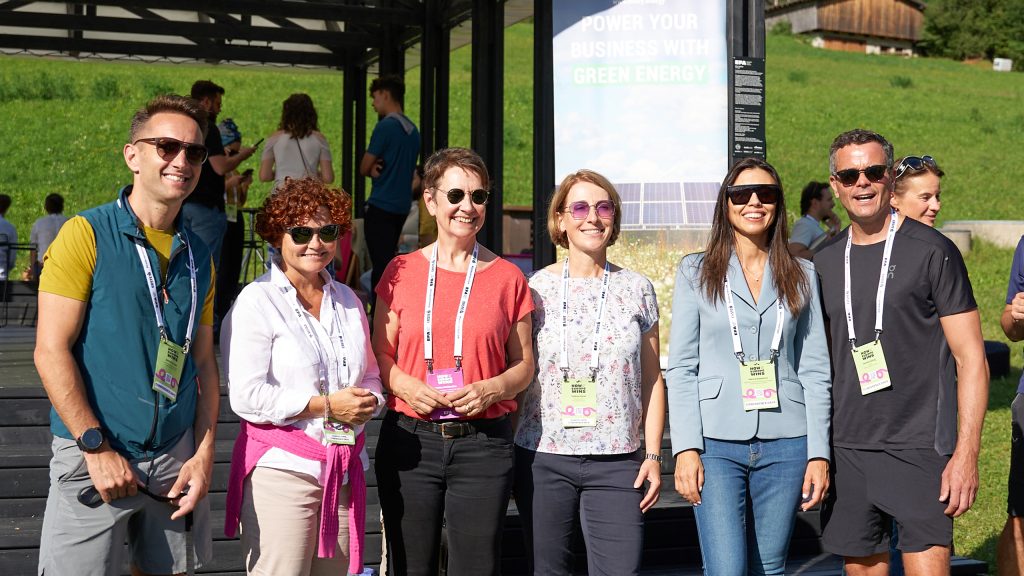
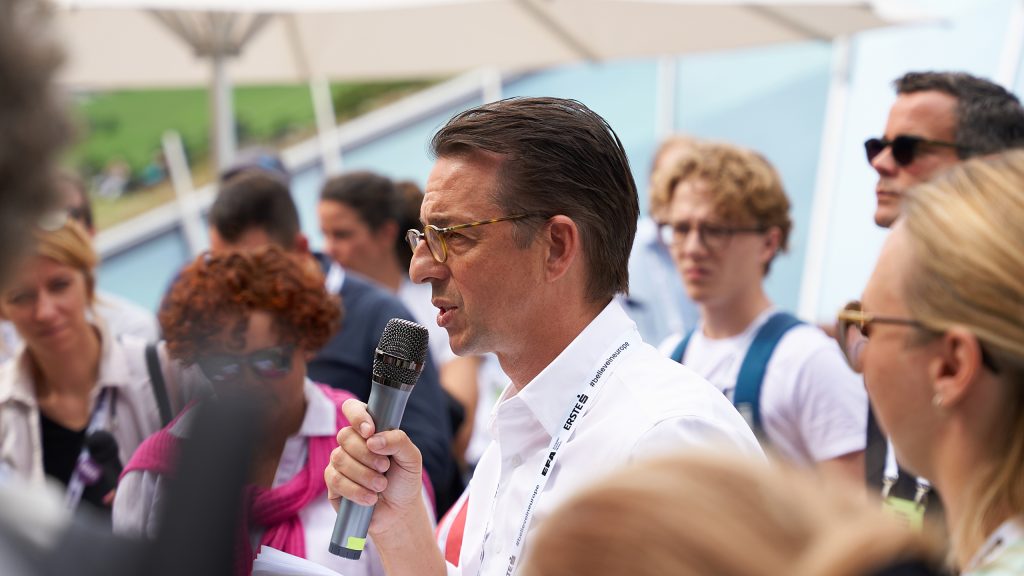
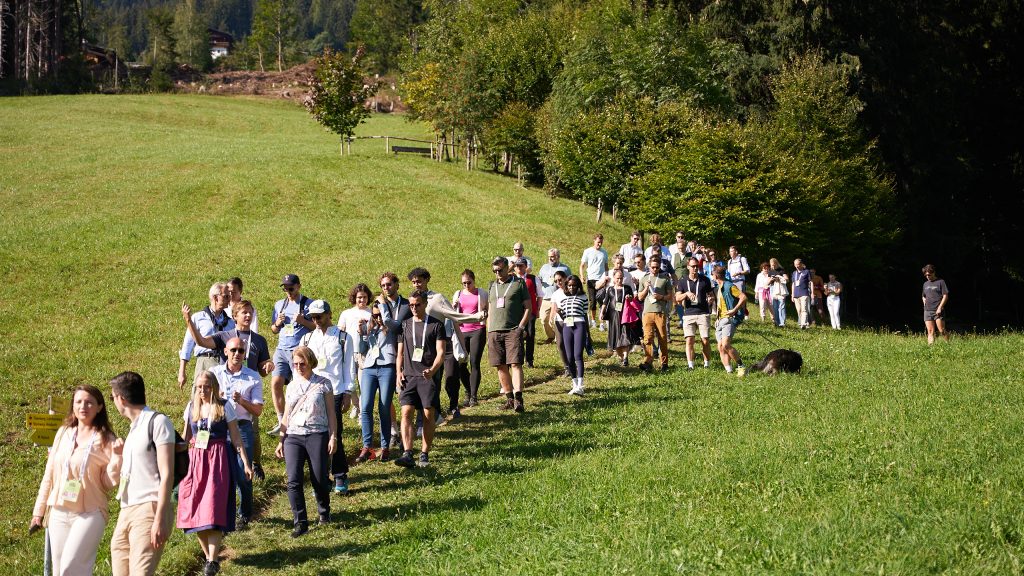
What will it take for Europe to win – and what does “winning” actually mean? Those questions took centre stage at the European Forum Alpbach (EFA) 2026, where more than 4,000 participants from around the world once again turned the Tyrolean mountain village into a think tank for Europe. Discussions focused on the continent’s capacity to act, compete and safeguard its sovereignty. Enery, meanwhile, took the debate to a place where new perspectives quite literally emerge: up the mountain.

The Austrian green power provider hosted the Enery Hike, a trek that—under the motto “Europe’s Race for Energy Competitiveness and Resilience”—became a high-caliber discussion forum. Joining Enery Co-Founder and CEO Richard König on the trail were State Secretary Elisabeth Zehetner, Sabine Herlitschka (CEO Infineon Austria), Gudrun Senk (CTO Wiener Linien), Marina Kobakova (Country Manager ING Bulgaria and Austria) and neoom-Gründer Walter Kreisel. among others. The exchange was moderated by Lukas Stühlinger,, Managing Partner at FINGREEN.

Enery Hile Moderator Lukas StühlingerLukas Stühlinger (FINGREEN)

Leveraging Europe’s Strengths

There was a consensus that speed requires scale; Europe must focus on large-scale renewable projects, rapid grid expansion with stronger European integration, and significantly faster permitting processes. Greater regulatory harmonization could serve as a pivotal lever.

“Europe needs 100% renewable baseload power at competitive prices, with more value created in Europe,” Richard König asserted with conviction. According to the Enery CEO, key milestones for realizing this vision would include a single price zone, the accelerated expansion of interconnectors and national grids, nearshoring, AI-automated component factories, and smart public procurement practices.

Enery Hike Forum Alpbach: SpeakerThe speakers (f.l.): Walter Kreisel, Elisabeth Zehetner, Sabine Herlitschka, Gudrun Sengl, Marina Kobakova and Richard König.
“For Europe to win, we need to turn ambition into execution,” said Marina Kobakova. While there is capital available, she noted that the he challenge is having enough mature, bankable projects ready to absorb it at scale. “Faster permitting, a stronger and more harmoniZed regulatory framework, ans greater investment in grid infrastructure are essential to accelerating electrification, strengthening energy security and enhancing Europe’s competitiveness.” As one of Europe’s leading financial institutions, ING is committed to financing the energy transition and renewable energy, while mobilising the capital needed to support the transition, Kobakova stated.

“Technology is a key driver of geopolitical competition—both in the transformation of the energy system and in fields such as artificial intelligence, quantum computing and robotics,” explained Sabine Herlitschka. Europe has proven technological strengths and global market leaders, and it needs to make full use of both. “When you are competitive yourself, you operate from a position of strength.”

“For a European tech company, securing that first reference project is more valuable than any subsidy,” added Gudrun Senk. “Public entities can award these—and in doing so, build European Champions—if innovation carries as much weight as price in the public procurement process.”

Forum Alpbach – Enery HikeRichard König: “We have covered 50% of the hike’s distance. But 80% of the elevation gain still lies ahead of us.”

The Climb Is Worth It

Richard König’s conclusion: “The key will be playing to our own strengths more consistently. Europe has the capability to generate competitive electricity, whether through hydro and wind power in Scandinavia, solar in Spain, hybrid power plants in Estonia or Romania, or pumped storage facilities in Austria.” Resources and economies of scale must be utilized smartly, interconnectors expanded, and the build-out of storage facilities advanced rapidly and without bureaucracy, thereby creating a truly competitive European electricity market. “Low energy costs allow tech companies to manufacture within Europe as well. Europe is also becoming a more attractive location for hyperscaler data centers,” the Enery CEO noted. “We now have over 50% renewable electricity in Europe—meaning we have covered 50% of the hike’s distance. But 80% of the elevation gain still lies ahead of us on the path toward 100% renewable baseload power in a European electricity system.”

Text: Michi Reichelt
Photos: Tobias Gärtner / gaertner.studio

Conference rooms certainly serve a purpose when it comes to hosting retreats or discussing strategic positions behind closed doors. Yet, truly fresh perspectives are—quite literally—usually found when we step outside those four walls and head into nature. True to this, Enery is hosting a very special format at this year’s European Forum Alpbach: the hike “Europe’s Race for Energy Competitiveness and Resilience”.

Not a Walk in the Park

On Wednesday, September 2, 2026, starting at 2:00 PM, we will swap the Congress Centrum Alpbach (CCA) for Tyrol‘s great landscape for two and a half hours. But anyone expecting a leisurely post-lunch stroll is sorely mistaken. Expect a steep ascent, foremost in an intellectual sense—diving deep into the foundations of our future industry and society.

Europe’s race for energy competitiveness and resilience will be decided by the speed of renewable energy and grid expansion, affordable prices, resilient supply chains, and effective financing. During the hike, we will openly discuss (in English) how Europe can accelerate the build-out of a truly integrated electricity network, remove permitting and regulatory bottlenecks, and deliver price stability for the industry. We will talk about whether renewables do translate into competitive energy costs and whether dependence on external manufacturing threatens long-term security. And we will explore the crucial question: Are Europe’s financial markets a strategic advantage or are they constrained by overregulation?

Experts Charting the Course

To ensure these questions don’t stall in mere theoretical platitudes, experts will act as the guides for this hike.
– Richard König, CEO of Enery will lead the way, while
– Gudrun Senk, Technical Managing Director Wiener Linien
– Marina Kobakova, Country Managerin ING Bank Bulgaria and  Austria as well as
– FINGREEN-Founder Lukas Stühlinger and
– neoom-Founder Walter Kreisel
will (among others) act as speakers and presenters, respectivley, throughout the hike at various stops.

The talks will include the following topics:
– What will determine Europe’s energy competitiveness by 2035?
>- How can we reach energy price competitivness?
>- Should Europe buy from China to be competitive in energy?
>- How can innovative financing make projects more competitive?

Are You Ready?

The Forum Alpbach thrives on discourse—and this hike thrives on creative minds willing to walk, debate, and think outside the box together with us. Whether you are working in the energy sector or have traveled to Alpbach as an innovator from a completely different field: if you want to help shape Europe’s energy future, this is the place for you.

Enery EFA Hike Hard Facts:

A final piece of advice: Please come equipped with sturdy footwear and plenty of drinking water. And don’t worry about the Tyrolean mountain weather: in the event of heavy rain, we will simply move our in-depth discussions about the future of Europe to Classroom 1 of the local elementary school. A highly fitting venue, really—after all, our goal is to completely rethink the basics of our energy sector.


FAQ

1. What role does the European Forum Alpbach play in addressing future challenges?

The European Forum Alpbach serves as an annual platform dedicated to addressing highly complex questions about the future through vibrant, collaborative discourse. The event brings together brilliant minds and innovative thinkers from various sectors to cultivate fresh strategic perspectives for Europe.

2. Where is the European Forum Alpbach held, and how flexible is its event organization?

The event is primarily anchored at the Congress Centrum Alpbach, located in the Kufstein district of Tyrol. It accommodates the forum’s core sessions and strategic discussions. However, the organization remains highly adaptable, seamlessly relocating outdoor activities to local indoor facilities like the community elementary school if challenged by volatile Tyrolean mountain weather.

3. What distinguishes Enery as a key player in the energy sector?

Headquartered in Austria, Enery acquires, develops, builds, and operates renewable energy plants throughout Central and Eastern Europe. The heart of its business is a young and energetic team, always looking for creative ways to help renewable energy have a greater impact in everybody’s everyday lives.

INTERVIEW: MICHI REICHELT
PHOTOS: Enery, EFA

Austria is at a crucial turning point: With a current renewable energy share of around 40 percent, the goal of climate neutrality by 2040 is still a long way off – and it will remain that way if the existing pace continues unchanged. Rather than a shortage of know-how or capital, this is primarily due to sluggish implementation and a lack of political consensus.

Christoph Dolna-Gruber knows what levers are important for this transformation. As one of the leading figures behind the Austrian Energy Agency’s project “Our Energy World 2040”, in this Enery Talk he provides answers to how a secure, clean and affordable energy system can actually succeed. He also explains how we can manage the energy transition and why one focus must be on increasing flexibility using digitalization and battery energy storage systems (BESS).

First, let’s take stock: Where does Austria currently stand regarding renewable energy?

Christoph Dolna-Gruber: Even though we repeatedly hear contradictory statements, the overall direction is clear: We are heading for climate neutrality by 2040. However, we are currently at a renewable energy share of just above 40 percent, and this goal will be unattainable at the current pace. On a technological level, we can be optimistic: The solutions for production, heating and mobility without fossil fuels are well known and for the most part already market-ready. Moreover, Austria is a wealthy country despite its budget constraints, especially regarding private capital. The task now is to mobilize this capital, which includes providing long-term frameworks such as tax incentives.
Financing models and sources must become more innovative because there will be a massive need for investment in grids, storage, power plants and other infrastructure – and this will last for decades. That is arguably part of the problem, as the benefits of these investments will only become apparent on a large scale in the medium to long term, especially regarding grid expansion. The goal is now to shorten this “waiting period” as well – to become faster, more pragmatic and more effective. Today, not tomorrow.

What is currently lacking? How can we speed things up?

A key factor is achieving shorter lead times, for example regarding ground-mounted photovoltaics or wind power expansion. Theoretically, there are enough attractive spaces in Austria where these power plants could be built more quickly. This requires the designation of acceleration zones that fall under the responsibility of the federal states. It is a process that demands discussions between the states and municipalities, involving the energy industry, project developers and the local population. One consideration should accompany all stakeholders here: Today, we outsource a large part of our energy production to distant countries. As we regain greater control of our own energy supply – and we should definitely do that –, our energy supply will move closer to us and become more visible. That might bother some people. But we are taking our destiny back into our own hands and becoming more independent, and that becomes visible.
Yes, people will see wind turbines, power lines and ground-mounted photovoltaic arrays when they look out of the window. Acknowledging and resolving this – being able to associate it with something positive, like self-determination or breaking free from dependencies – is a significant factor.
It is here that the mayors play an important role in their municipalities; they bear immense responsibility, and I do not envy them for that. But they shouldn’t be left alone with this huge responsibility. They need backing on a national and regional level, from interest groups – and also from local companies that need an affordable energy supply to remain competitive in future.
In short: We will have to pull together much more than is currently the case. What we see today is often the exact opposite. The expansion of renewables is used for political mobilization, partly to fuel a kind of culture war. And those things have no place in existential issues such as a secure, affordable and clean energy supply – without major dependencies.

What narrative needs to be told, and what arguments can win people over?

I believe the two main arguments are, on the one hand, more control of our own energy supply, and on the other hand, greater independence from severe price fluctuations. The climate issue is currently less relevant; instead, the focus is precisely on stronger control. And you can also see this in the number of smaller photovoltaic systems in Austria. Statistically speaking, 1 in 4 buildings already have a PV system. That is the most direct way for a country to regain control of its own energy supply. In turn, this forms the basis for integrating battery storage systems to increase flexibility throughout the entire power system. You cease to be dependent on oil and gas, which are energy sources with an import level of up to 95 percent. This applies not only to private individuals but to companies as well.

Grid infrastructure is always a stumbling block. How do we solve this problem?

The grid is not a bottleneck everywhere. There are distinct regional differences. But what is important is that grid bottlenecks occur locally and at specific times. For long stretches of the year, there is sufficient capacity in the grids. This means that the way we can shift grid feed-in and consumption time-wise is decisive for how much we need to expand the grids. Storage systems play a crucial role here, as does improving flexibility with regard to consumption. This means that PV systems must be geared more towards on-site private consumption. Currently, we have PV systems in Austria that feed an oversupply of electricity into the grid at weekends in the spring. It doesn’t have to be like that. There are various instruments that can help us to get a grip on it. Adjusting funding or tariff conditions, for instance, to hold back electricity from PV systems at midday – not feeding it in, but rather consuming or storing it so it can be put to good use later.

What is still needed for this at present?

We are lacking the widespread, intelligent management of these PV systems. This needs to be made as accessible as possible, via digitalization and data exchange. With attractive apps and energy management systems that are easily implemented and then automate the process. Storage optimization is a key factor, also in connection with energy communities. The basis of this is digitalization, both behind the meter and in front of the meter at grid operators. It is an absolutely essential aspect in overcoming the bottleneck of grid congestion.

Who will bear the grid costs in the medium term?

With rising on-site private consumption and therefore lower grid draw, there is naturally a growing challenge to spread increasing grid costs across ever fewer kilowatt-hours drawn. That is a fact. The gap is widening, and the situation will become more difficult for those who cannot participate in decoupling from the grid.
Therefore, the systemic responsibility of those who increasingly opt out must be enforced. Restructuring grid tariffs also plays a role here. Making grid tariffs more flexible will help to create incentives on the one hand, and pass on systemic responsibility to a greater degree on the other.
What also helps is expanding the use of electricity. In other words: being able to allocate costs to a larger number of kilowatt-hours. Here, I mean electrification in terms of mobility, heating and industry, which is so crucial for greater control and lower import dependency. By doing so, we can switch from coal, oil and gas to energy sources that we can produce ourselves. In Austria, in Europe.
And then, in the medium term, the question of alternative financing concepts also arises – opening up grid cost financing to institutional investors and private individuals who not only provide capital but may also do so on better terms.

How relevant is system-serving capability?

The ElWG (Electricity Act) defines this term, and E-Control establishes the criteria. In the context of large-scale storage systems, this is highly relevant because it involves exemption from system usage charges for a period of 20 years. That can make or break a business case. As things currently stand, there are a number of criteria that must be met cumulatively – and these, overall, are very restrictive. This means that the number of storage systems that qualify as system-serving in the strictest sense is likely to be small. Understandably, there is caution when exempting certain assets from grid cost financing for 20 years.
On the other hand, these system-serving large-scale storage facilities are also relevant for dampening or altogether reducing the rise in future grid costs. As mentioned earlier: To accelerate the expansion of renewables, we must vastly open up the realm of possibilities. Batteries are important, and this must be taken into account when defining system-serving capability. However, time-of-use grid tariffs, grid tariffs for controllable loads, grid connection costs being avoided, and – above all – dynamic tariffs, are major incentives in favour of flexibilization and battery storage well beyond the definition of system serving.

How do we get the public on board?

Despite various campaigns that have brought uncertainty and fearmongering in connection with electromobility, heat pumps and renewables, things are progressing well. If we manage to de-politicize – and specifically, “de-partisanize” – the debate, then we can succeed. The energy transition is not a green or ideologically motivated project. It is fundamentally sensible, and that is why it would be important for everyone to pull together. And for companies to raise their voices and state what they need as well. With wind power, this isn’t working well at all right now. There, the politicization and mobilization of this culture war are highly successful in creating uncertainty, especially on a regional level.
But the wind is changing again now. With the Iran war. With the realization that we have to pay more attention to our own affairs again. That we cannot simply rely on energy flowing continuously no matter what, including through the Strait of Hormuz. And as this realization is now returning with greater strength, I remain entirely optimistic.

Fact Sheet: About the Expert

Mag. (FH) Christoph Dolna-Gruber, BSc is an energy expert and Head of Strategy & Business Development at the Austrian Energy Agency (Österreichische Energieagentur). For over 15 years, he has been focusing on key issues concerning the future of energy, the transformation of the energy system, decarbonization, and the implementation of the energy transition in Austria and Europe.

  • Current Position: Head of Strategy & Business Development, Austrian Energy Agency (AEA)

  • Key Expertise & Focus Areas:

    • Energy system analyses and climate neutrality scenarios (including as part of the project “Our Energy World 2040”)

    • Transformation and decarbonization of the industrial, heating, and mobility sectors

    • Reduction of dependence on fossil fuel imports, energy efficiency, and strategic energy autonomy

    • Digitalization and Artificial Intelligence (AI) in energy management

  • Education: University of Applied Sciences Burgenland (Diploma Degree, International Business Relations), EHSAL Management School Brussels (International Management), UAS Technikum Wien (B.Sc., Urban Renewable Energy Technologies)

  • Role & Responsibilities: Development of evidence-based analyses, strategic concepts, and decision-making frameworks for policymakers, government ministries, and industry to achieve Austrian and European climate targets.

INTERVIEW: MICHI REICHELT
PHOTO: AUSTRIAN ENERGY AGENCY

Enery’s “full cycle” capability

The European energy transition is no longer just a theoretical roadmap; it is being built, piece by piece, across the landscapes of Central and Eastern Europe (CEE). Romania, in particular, has emerged as a central hub for this transformation. And it is within this dynamic environment that Enery has successfully launched its Project Titu. Located in the southern part of the country, this photovoltaic (PV) plant is more than just an addition to the regional grid – it represents the culmination of Enery’s core mission: delivering reliable, affordable and long-term green energy through a fully integrated approach.

For Alberto Martinez, Head of EPC, the project carries a special significance. “Our first fully developed project in Romania where we are completing the full cycle – development, construction and operation – reflects Enery’s DNA in delivering green electricity to the European grid,” he explains. This “full cycle” capability is what sets the company apart in a competitive market, ensuring that quality and sustainability are baked into every stage of a project’s lifecycle.

Full-Cycle Development and Grid Connection Execution

However, implementing such a complex system is rarely a simple task. Construction began in February 2025, and the team faced the challenge of coordinating numerous components within a tight timeframe. Construction Manager Asen Asenov highlights the intensity of the build phase: “From a construction standpoint, Titu PV is a highly demanding project, requiring tight coordination across numerous subcontractors and precise execution of the substation works, where both the erection activities and the grid connection process present significant challenges.” For Asenov, the successful energization in March 2026 is a professional highlight, proving that even the most complex grid-connection processes can be mastered through expert management and technical rigour.

Reflecting on the journey so far, Project Manager Manuel Maier sees the project as a victory for collaboration. “What makes Project Titu a success, despite the technical challenges we overcame during construction, is the cooperation among all partners, contractors and stakeholders involved throughout the process,” he says. This spirit of cooperation has enabled the project to reach its current testing period and move towards full commercial operation. As Project Titu begins to deliver its 80 GWh of green electricity every year, it stands as a clear signal of what is possible when technical expertise meets a shared vision of a cleaner, more resilient energy future for Romania and the entire CEE region. This project is a testament to the power of strategic partnerships and technical excellence, providing the clean energy needed to power the world’s first zero CO2 emission tyre factory.

PV in Titu, RomaniaEnerys PV system in Titu, Dâmbovița County, in Southern Romania.

Technical Specifications of Project Titu

The scale of Project Titu is impressive. To achieve an expected annual production of 80 GWh, Enery has utilized state-of-the-art technology from industry leaders.

Key Technical Data:

  • DC capacity: 54.28 MWp
  • AC capacity: 42.60 MWac
  • Expected annual production: 80 GWh
  • Solar modules: 88,270 high-efficiency modules from Longi Solar
  • Inverters: 142 Huawei inverters and specialized medium-voltage stations
  • Tracking system: single-axis trackers from Nextracker
  • Construction start: February 2025
  • Energization: March 2026

Single-axis trackers from Nextracker allow the panels to follow the sun’s path with mathematical precision and enable the plant to maximize its energy yield.

Empowering the Local Community

The technical success of Project Titu is not the end of the story, but rather a beginning. The site has been designed with the future in mind, featuring a planned PV extension of approximately 10 MWp. Beyond the megawatts delivered to the grid, Enery remains deeply committed to the social dimension of its projects. At Titu, the transition to green energy is felt directly by the local community through targeted social infrastructure projects. Sustainability, in Enery’s view, must be inclusive.

As part of the project’s value creation, Enery has installed a 10 kWp PV system on the roof of the kindergarten in Potlogi and an 8 kWp system on Titu Community Centre. These installations do more than just lower operational costs for local institutions; they serve as educational tools that empower the next generation. In addition, 45 children in need received a full set of winter clothes and accessories.

The project will also implement a biodiversity monitoring pilot in partnership with XNatura. The site will be equipped with two acoustic IoT sensors to monitor pollinators and other flying insects as well as one sensor for bird monitoring, providing data of measurable biodiversity changes over time.

By bringing solar technology directly into the lives of citizens and children, the project fosters a deeper understanding of renewable energy and its benefits. It is a “smart community” approach that ensures the energy transition is not just something that happens in a remote field, but also something that creates visible, positive change in neighbourhoods.

Decarbonizing Industry: The Nokian Tyres Partnership

One of the most compelling aspects of Project Titu is its direct impact on industrial decarbonization. In an era where corporate ESG targets are becoming a “licence to operate”, the role of Power Purchase Agreements (PPAs) has never been more critical. Project Titu is a prime example of this development, as it is underpinned by a long-term electricity offtake agreement with Nokian Tyres.

The agreement ensures the delivery of 61 GWh per annum to Nokian Tyres, specifically supporting their groundbreaking manufacturing facility in Oradea. This factory is recognized as the world’s first zero CO2 emission tyre factory – a feat achieved by eliminating fossil fuels from its production processes and relying entirely on CO2-free energy. By securing clean electricity from Titu, Nokian Tyres is not only getting protected against market volatility but also making a tangible contribution to Europe’s green transition. This partnership illustrates how Enery acts as a strategic enabler for industrial leaders, helping them reach net-zero greenhouse gas emission levels by 2050 while maintaining international competitiveness.

FAQ

What is a photovoltaic system?
Photovoltaics refers to the direct conversion of sunlight into electrical energy using solar cells. In a photovoltaic system, these solar cells generate pure direct current (DC) from incoming sunlight through the photoelectric effect. An inverter then converts this into usable alternating current (AC) so that the electricity can be consumed in the household, stored, or fed into the public grid.

How much green electricity will Project Titu produce?
Project Titu, a 54 MW solar park in Romania commissioned by Enery, is expected to produce 80 GWh of green electricity per year.

How does Project Titu support industrial decarbonization?
Project Titu is underpinned by a long-term electricity offtake agreement with Nokian Tyres, delivering 61 GWh per annum to support the company’s zero CO2 emission tyre factory in Oradea.

How does Project Titu benefit the local community?
Enery has installed PV systems on the kindergarten in Potlogi and Titu Community Centre, provided winter clothing for 45 children in need and planned a biodiversity monitoring pilot with XNatura.

TEXT: MICHI REICHELT
PHOTOS: ENERY

Strategic Impact: Building a Milestone for Romania’s Energy Transition

Approximately 762 megawatt peak of installed capacity. Over 1 gigawatt hour of storage capacity. Upon commissioning, a new green energy hybrid plant constructed by Enery in Ogrezeni, southeastern Romania, will be a milestone in the country’s decarbonization and energy security goals. Situated in the district of Giurgiu, the project is setting new benchmarks for scale, local value creation and technological integration even during its development phase.

Flagship Project: Local Value Creation and Full-Scale Execution

Turning a project of this magnitude from a blueprint into reality is a huge challenge. Official construction began in March 2026 in partnership with the Enevo Group, a Romanian EPC provider. Consequently, the entire development – photovoltaic (PV) plant, grid connection and battery energy storage system (BESS) – is being built entirely within the local value chain. And by tapping into regional engineering and construction expertise, the project also successfully bypasses many typical global supply chain bottlenecks. The on-site teams are driving an incredibly ambitious schedule, targeting completion and energization for the second quarter of 2026.

Manuel Maier, Enery’s Project Manager for Ogrezeni, explains the operational realities on the ground: “Project Ogrezeni is our flagship project not only on paper but also in execution – we will construct the PV plant using high-quality equipment from leading suppliers in the industry, bringing together a team of execution experts and working with proven and experienced partners.”

Ogrezeni construction startConstruction works for the Ogrezeni project started in May 2026.

Technical Specifications of the Ogrezeni Hybrid Plant

Logistical coordination across such a vast area is exceptionally demanding. As Maier explains, “Despite its size and the allocation on 24 clusters over almost 1,000 ha, one of the main challenges will be to coordinate all workstreams throughout construction towards energization.” He adds, “The definitive highlight of this project will be to see the 400 kV grid infrastructure with its two 300 MVA power transformers and the co-located BESS of over 1,000 MWh come alive for the first time.”

The site combines large-scale solar generation, battery storage and high-voltage grid infrastructure in one integrated hybrid plant.

Community Impact: Local Benefits Beyond Green Electricity

A cornerstone of Enery’s project philosophy is the firm belief that the energy transition must deliver tangible benefits for the local people and environment. Therefore, the project in Ogrezeni represents much more than just a source of green electricity. To foster inclusive, equitable and diverse communities, early social initiatives have already involved renovating the local football pitch at the Aurel Solacolu secondary school, for example. Additional planned measures include installing local community PV systems to ensure that immediate neighbours can also directly enjoy the advantages of solar power.

Furthermore, the Ogrezeni project places a strong emphasis on long-term sustainability education. Enery plans to launch educational programmes at primary and secondary schools, covering topics such as renewable energy, general health and safety – with a specific focus on road and traffic safety – as well as biodiversity.

Biodiversity, Renaturation and Agri-PV Potential

From an ecological standpoint, the entire site is designed to harmonize with the local ecosystem. Thus, Enery is evaluating a biodiversity and renaturation strategy, which should incorporate systematic monitoring campaigns alongside an ambitious habitat restoration project aimed at achieving long-term positive effects for local species. Exploring innovative concepts for dual land use, Enery is also assessing an Agri-PV pilot project that combines agriculture with solar generation to maximize land utility without displacing local farming traditions.

Green Financing and Regional Energy Security

Backed by a €460 million green financing package recently concluded with a consortium of international banks, Ogrezeni represents a massive leap forward for regional energy security and the modernization of the power grid.

Key Technical Data:

  • Approximate installed capacity: 762 MWp
  • Battery storage capacity: over 1 GWh
  • Site allocation: 24 clusters over almost 1,000 ha
  • Grid infrastructure: 400 kV grid infrastructure with two 300 MVA power transformers
  • PV modules: 1,160,000 PV modules (650/655/660 Wp) supplied by Longi Solar
  • Tracking systems: Nextracker single-axis tracking systems
  • Inverters: 1,697 inverters (350 kVA)
  • Medium-voltage stations: 80 medium-voltage stations from Chint Power
  • Expected annual generation: 1,100 GWh per year
  • Households supplied: approximately 651,326 households
  • Annual emission savings: roughly 288,375 tonnes of CO2 equivalents

To optimize daily yields by tracking the sun’s path, the PV modules are mounted on Nextracker single-axis tracking systems. Meanwhile, Chint Power handles the complex conversion into grid-compliant electricity through inverters and medium-voltage stations.

FAQ

What is Project Ogrezeni?
Project Ogrezeni is a large-scale hybrid renewable energy project by Enery in southeastern Romania, combining a photovoltaic plant with a co-located battery energy storage system.

How large is the Ogrezeni hybrid project?
The project includes approximately 762 MWp of installed capacity and over 1 GWh of battery storage capacity, making it one of Europe’s largest hybrid projects.

How much green electricity will Project Ogrezeni generate?
The site is expected to generate 1,100 GWh per year, enough to power approximately 651,326 households while saving annual emissions amounting to roughly 288,375 tonnes of CO2 equivalents.

TEXT: MICHI REICHELT
PHOTOs: ENERY

Strategic Impact: Empowering Bulgaria’s Grid Stability

With the commissioning of the Nova Zagora battery energy storage system (BESS), Enery is taking a vital step towards a more flexible and stable energy system in Bulgaria. The facility strengthens grid stability and creates new opportunities for integrating renewable energy across the country.

Over the past few months, this project has taken shape in southeastern Bulgaria, adding a new dimension to the country’s energy infrastructure. As a key player in Bulgaria’s energy transition, Enery’s project is essential for achieving reliable and affordable electricity supplies in today’s volatile markets. With operations starting in March 2026, the system supports the large-scale expansion of renewables across the region.

With the commissioning of the Nova Zagora battery energy storage system (BESS), Enery is taking a vital step towards a more flexible and stable energy system in Bulgaria. The facility strengthens grid stability and creates new opportunities for integrating renewable energy across the country.

Technical Specifications of the Nova Zagora Storage Facility

The Nova Zagora facility is designed as a standalone battery storage system, setting a record as the largest BESS project in Central and Eastern Europe.

Key Technical Data:

  • Total Capacity: 601.8 MWh
  • Power Output: 150 MW
  • Infrastructure: 120 containers (5.015 MWh each)
  • Grid Connection: On-site 33/110 kV substation
  • Transformer Capacity: 150 MVA with 30 individual transformer stations (5.140 MVA each)

“Delivering the Nova Zagora BESS requires precise coordination of multiple construction and electrical work streams,” explains Dimcho Dimov, Site Manager and Head of Monitoring Control Room. “Seeing these components come together into a fully functioning facility that supports grid stability is extremely rewarding.”

Innovative Green Financing and Strategic Partnerships

The project rests on a solid economic foundation through a green financing package from DSK Bank AD, specifically aimed at sustainable energy infrastructure.

To ensure long-term stability, Enery secured a Virtual Power Purchase Agreement (VPPA) with the international energy company Vitol. This commercial structure provides planning certainty and underlines the project’s strategic importance for the European energy market. Beyond technical innovation, the project utilized local expertise, involving numerous regional companies and skilled workers during construction.

Driving the Energy Transition in Central and Eastern Europe

Beyond its importance for the energy system, the Nova Zagora project has a strong regional impact. For Enery, this facility is part of a broader vision: to drive the expansion of renewable energy across Central and Eastern Europe while offering innovative solutions for integration and optimization.

Stoyan Petrov, Head of O&M at Enery Bulgaria, sees projects like Nova Zagora BESS as a key step: “From an operations and maintenance perspective, large-scale battery storage adds a new dimension to how we manage energy assets. Integrating advanced technologies such as BESS will play a key role in ensuring reliable, efficient and future-ready energy infrastructure.”

Valentin Valkov, Project Manager, concludes: “Nova Zagora BESS is an exciting project because it represents the future of energy systems. Being part of a project that combines technical complexity, innovation and real impact on the energy sector makes the work highly motivating.”

FAQ

What is the largest battery storage in CEE?
The Nova Zagora BESS in Bulgaria, developed by Enery, is currently the largest battery energy storage system in the CEE region with 601.8 MWh capacity.

How does BESS support the energy transition?
Battery Energy Storage Systems (BESS) stabilize the power grid by storing excess renewable energy and releasing it when demand is high, reducing reliance on fossil fuels.

When did the Nova Zagora BESS become operational?
The facility was fully commissioned and entered operation in March 2026.

TEXT: MICHI REICHELT
PHOTO: ENERY

While global oil and gas markets react to geopolitical shocks, a significant shift is occurring within Europe’s power systems. Despite surging gas prices, electricity markets have shown remarkable resilience, largely due to the increasing share of renewables acting as a buffer against external crises. As a co-founder and CEO of Enery, Richard König has spent years driving the transition across Central and Eastern Europe. In this expert talk*, he discusses the decoupling of energy prices from fossil fuels, the critical need to overcome bureaucratic hurdles in electrification, and how Enery is leveraging the region’s largest battery storage (BESS) portfolio to provide 24/7 green energy to industrial consumers.

What impact do you see on energy markets, beyond price increases, because of the situation in the Gulf?

Recent geopolitical tensions have once again highlighted the resilience of Europe’s electricity markets. Even when gas prices surged dramatically, doubling at one point, electricity prices increased much more moderately, by around 25–30%. This decoupling is largely due to the significant share of renewables already integrated into the system.

Even if this conflict is not long-lasting, what should be the key signal, especially for Europe, which is highly dependent on oil and gas imports? What will be the impact on energy prices, given that a decrease has been expected due to the growth of renewables?

The key signal for Europe is clear: accelerating the deployment of renewables is not only a climate priority, but a strategic necessity for energy security and price stability. Solar, wind, and increasing energy storage are acting as buffers against external shocks, reducing exposure to volatile fossil fuel markets. Overall, thanks to the scale of renewable capacity built over the past decade and the pipeline of storage investments, future shocks to the electricity system are likely to have a more limited impact than in the past.

Richard König, CEO EneryRichard König, CEO Enery

Although we already have two wars with a major impact on energy prices, at the European level we are not seeing a decline in fossil fuel consumption, and electrification seems to be stagnating. What solutions do you see, including for the local market?

From our perspective, the issue is not a lack of solutions, but a lack of speed in implementation. Fossil fuel consumption remains high because electrification, grid expansion, and permitting renewables are still too slow, with high bureaucratic burden. The political will and execution of an ‘electrified’ industry is not decisive enough. The priority should be to accelerate renewable deployment by simplifying permitting and ensuring grid access, while actively supporting electrification in industry, heating, and transport. At the same time, investments in storage and grid infrastructure are essential to provide the needed flexibility. At the local level, this means focusing on projects that are already viable, especially solar and storage, while adapting to grid and regulatory constraints. Ultimately, renewables are the most effective way to reduce dependence on fossil fuels—the key challenge now is scaling them faster.

Do you see an increase in demand for projects, especially in the current geopolitical context?

We are seeing a growing demand for integrated projects, especially those that combine renewable production with storage solutions. The current geopolitical context emphasizes the need for energy security and predictability from all points of view – production and energy prices – which translates into a greater interest on the part of industrial consumers for long-term contracts. It is a dynamic that confirms the transition of the market towards more sophisticated models, in which the optimization of portfolios and production are becoming essential, and standalone PV projects are becoming less sufficient.

Speaking of storage solutions: What are Enery’s plans regarding BESS in CEE?

We have c. 700 MWh of own batteries in operation and have c. 4 GWh of third-party batteries under contract for portfolio optimization and hence are operating and trading already the largest battery portfolio in CEE. We are bringing two more utility-scale projects with together 1.8 GWh into construction in the next months and are further increasing our portfolio optimization business for third parties. Batteries are crucial for energy security, grid stability, lowering system costs and help on the route towards providing 24/7 renewable supply to customers at affordable prices. Our battery portfolio allows us to further advance our client offering.

*Parts of this interview were first published in Ziarul Financiar (https://www.zf.ro/).

TEXT: MICHI REICHELT
FOTOs: ENERY

When Enery says that people are the company’s greatest asset, it’s not just an empty phrase: With more than 30 nationalities represented, Enery’s team reflects the inclusive and global culture it is building, each day celebrating the expertise and passion of the team’s diversity. Nobody knows this better than Tuba Ersoy. With more than 20 years of international HR leadership experience across global organizations and multiple industries, Enery’s Chief People Officer recognizes the impact and importance of green jobs. And she knows what skills will be needed to shape the next decade in renewables. In this expert talk, Tuba explains how Enery is able to embed sustainability, attract talent and build resilient teams across borders.

How important are green jobs these days, particularly in Central and Eastern Europe?

Tuba Ersoy: Green jobs are at the heart of the energy transition. They turn climate and energy challenges into real projects with measurable impact. Without skilled people, this transformation simply cannot happen. In CEE in particular, renewable energy has become much more than an environmental topic. Rather, it is now a strategic priority tied to energy independence, resilience and long-term competitiveness. That also gives green jobs a strong sense of purpose. People can clearly see why their work matters, and this shared mission creates alignment across teams, countries and functions. It is one of the reasons why interest in sustainability is growing across all age groups and professional backgrounds.

Which skills are essential, and which will become even more important over the coming years?

Today, success in renewable energy requires a combination of technical expertise, project management, an understanding of regulations, and commercial awareness. Collaboration skills and the ability to pursue cross-functional collaboration in an international, fast-moving environment are other factors that are just as important. Looking ahead, the profile is going to become broader. Hybrid systems, battery storage and digital solutions require systems thinking rather than siloed expertise. Data literacy, automation and digital asset management will all become more significant. At the same time, adaptability will be critical. Technologies, markets and regulations are evolving quickly, so continuous learning, reskilling and ownership beyond traditional role boundaries will increasingly define top performers.

Purpose and sustainability are often highlighted in the renewable energy sector. How do you make sure these values are truly embedded in everyday work?

At Enery, sustainability is not an abstract concept or a communications exercise; it is part of how we work every day. We translate it into clear expectations and measurable action. Sustainability-related objectives are embedded in our KPIs, which means purpose is directly linked to performance, accountability and ownership. That makes it a shared responsibility across the business rather than a topic owned by only one area. We also continuously listen to our people. Our regular pulse surveys show that employees experience these values quite distinctly in their daily work.

Enery’s portfolio spans photovoltaics, wind power and hybrid projects with battery storage. How does this affect recruitment, learning and workforce planning?

We have to look far beyond traditional role definitions. Solar, wind and hybrid systems each bring specific technical, regulatory and operational challenges, so we look for people who combine profound expertise with openness to interdisciplinary collaboration. In recruitment, we prioritize both specialist knowledge and strong soft skills. We need experts in engineering, grid integration, storage technologies and digital systems, but we also value people who understand the broader project life cycle from development to asset management. From a people perspective, continuous development is essential. As hybrid solutions gain relevance, workforce planning becomes more strategic because we are not only hiring for today’s needs, but also for the capabilities required for the next phase of growth.

Your teams bring together many nationalities, disciplines and cultural backgrounds. How does this diversity shape leadership, collaboration and decision-making at Enery?

Diversity is one of our strongest assets. Today, our organization includes colleagues from 33 different nationalities, and that naturally broadens the way we look at challenges and opportunities. It requires inclusive leadership, transparency and strong cross-border communication. Leaders need to create an environment in which different perspectives are encouraged and alignment is built through open dialogue. Diversity improves the quality of collaboration and decision-making. When operational, commercial and corporate teams approach the same issue from different angles, decisions tend to become more robust, future-oriented and resilient. When managed well, this mix of perspectives is a real competitive advantage.

Speaking of competition: How does Enery position itself as an attractive employer?

In renewable energy, salary alone is never enough. People want to understand the impact of their work, and that is one of Enery’s strongest advantages. Our employees can clearly see how their contribution supports Europe’s energy transition and energy security. We also offer growth, ownership and international exposure. As a fast-growing company operating across multiple markets and technologies, Enery gives people the opportunity to work on complex projects and take real responsibility early on. At the same time, credibility matters. People look for transparent leadership, clear values and a culture they can trust. In that sense, our employer positioning is built on a combination of purpose, development and entrepreneurial energy.

Central and Eastern Europe is a highly diverse region. What challenges and opportunities does that create for recruitment, leadership and corporate culture?

CEE is highly diverse in its economic, cultural and regulatory spectrum, and that creates both complexity and opportunity. Each market has its own pace of development, talent pool characteristics and business expectations, so hiring strategies and leadership approaches need to be adapted locally. What works in one country cannot simply be copied into another. At the same time, this diversity is highly enriching. It broadens the talent pool, strengthens cross-cultural collaboration and makes the organization more resilient. One of our biggest learnings is that consistency should not be confused with uniformity. A strong employer value proposition needs a clear common core, but it also needs enough flexibility to reflect local realities.

From your perspective, what makes Enery an exceptional employer and how do employees experience the company today?

What makes Enery truly stand out is the combination of a powerful purpose and exceptional people. Our teams are often described as passionate, smart, supportive, results-oriented and highly motivated. As our internal surveys show, employees experience Enery as a dynamic, collaborative and fast-growing organization where initiative is encouraged and ideas can be tested quickly. They appreciate the ownership they are given, the entrepreneurial speed in decision-making and the supportive culture built on open feedback and inclusion. Many also refer to our strong regional footprint in CEE, solid financing capacity as well as effective tools and technologies as all being important enablers. Together, these elements create an environment where talented people can contribute in meaningful ways while growing with the organization.

Finally, why are you personally excited to work with and for Enery?

What motivates me most is the opportunity to contribute to a meaningful purpose in a fast-moving and entrepreneurial environment. Enery combines strong commercial execution with work that has real long-term impact. I also find it inspiring to work alongside exceptional people from many different nationalities and backgrounds, all bringing energy, expertise and different perspectives to the table. For an HR professional, it is incredibly rewarding to support such a talented and purpose-driven group while helping to build an organization that is growing across the region. Being able to do that in a company whose mission genuinely matters is a very special opportunity.

TEXT: MICHI REICHELT
PHOTO: ENERY